The April 21, 2026 Select Board meeting
During Public Input, a resident raised concerns about the APD's Flock Safety contract. Chief Brian Gill responded on the record with eleven specific claims. The full exchange is preserved on the Ayer Public Access Corporation YouTube channel — and the public-records corpus on this site enables a precise fact-check.
Last updated
Most of Gill's eleven claims are unfalsifiable from the meeting alone. With the public-records corpus released months later, several are now verifiable — and at least two are demonstrably misleading, including his claim that the cameras were funded "through a grant through the NERAC grant system." The corpus shows the funding source was a different federal program entirely (DOJ/BJA Edward Byrne JAG via MA OGR), not the DHS Homeland Security Grant Program that flows through NERAC.
The primary source
Ayer Public Access Corporation (APAC) records and broadcasts every Select Board meeting. The April 21, 2026 meeting recording is publicly available:
▶ Watch on YouTube (APAC channel)
The Public Input segment is in the opening block of the meeting, between the pledge and the announcements.
What Chief Gill said on the record
These are the eleven specific claims Gill made about Flock during the exchange. Each is graded against what the public records released two months later actually show.
Funding: "This was fully grant funded" through "the NERAC grant system"
demonstrably misleadingWhat the corpus shows: The funding was an Edward J. Byrne Memorial Justice Assistance Grant from the U.S. Department of Justice (Bureau of Justice Assistance), administered by the Massachusetts Executive Office of Public Safety and Security / Office of Grants and Research. CFDA 16.738, federal award #15PBJA22GG00645JAGX, $25,000 awarded 10/6/2025 (Grant p.18, p.20).
What "NERAC" is: the Northeast Homeland Security Regional Advisory Council, which distributes a different federal program — the DHS/FEMA Homeland Security Grant Program — through MAPC and EOPSS.
Why this matters: Byrne JAG and HSGP are different statutory programs with different funding sources (DOJ vs DHS), different purposes (general law-enforcement support vs counterterrorism/homeland-security preparedness), and different oversight pathways. Naming the wrong program publicly obscures which federal taxpayer dollars actually paid for the cameras and which oversight body was supposed to approve the use. There is no NERAC project request form in this corpus.
Also: "fully grant funded" is true only for Year 1. Total grant = exactly $25,000. Contract Year 1 = exactly $25,000. Years 2–4 ($25,000/year) have no identified funding source. See the money trail.
Timeline: cameras have been up "approximately three or four weeks"
timing inconsistent with contractWhat the corpus shows: The Flock Order Form was signed 10/29/2025. The Town paid the invoice in full on 12/18/2025. If cameras were physically installed "three or four weeks" before April 21, 2026, that puts install around late March 2026 — roughly five months after the contract was signed and three months after the Town paid.
The gap between payment and installation is unexplained.
Note: Flock onboards agencies into the nationwide data-sharing network at contract signing, not at camera activation. Ayer PD has appeared on the data-sharing partner lists of other agencies' Flock transparency portals (Waltham, Woonsocket, Newtown CT, Simsbury CT, Putnam CT, East Hampton Village NY, Boardman Township OH) — meaning Ayer's data-sharing configuration may have been set by Flock months before the cameras went up locally. For example, Waltham PD's own Flock transparency portal lists "Ayer MA PD" among the agencies it shares data with.
Status: the system "hasn't fully come up yet" / "fully rolled out"
consistent with corpusConsistent with the late-install timing in Claim 2. The contract's retention period is 30 days and the system was still in early-deployment phase as of April 2026.
Training: officers haven't completed training yet
consistent with corpusThe grant application's original timeline (Grant p.7) anticipated "Training" running 1/1/2026–3/31/2026 with the Deputy Chief responsible. Per Gill, this had still not completed by April 21, 2026. No training records appear in the corpus.
Policy: "There's definitely a policy" but it hasn't been published
corpus produced the policyThe Lexipol-published Policy 426 (ALPR) and Policy 336 (Public Safety Video Surveillance) were released in response to the public records request (view the policies). The Lexipol manual footer is dated 2026/04/27 — that is the manual's print date, not necessarily the policy's adoption date.
Gill stated on April 21 that he "liked the idea" of publishing the policy and "saw no issue with that at all." As of June 2026, the policies are still not posted on the Town of Ayer's public website or on Lexipol's public portals. The only way the public has seen Policy 426 is through the PRR.
"Flock doesn't tell us who's driving cars … doesn't tell us about anything about a person … doesn't tell us who owns them"
misleadingTechnically, a Flock camera reads license plates and other vehicle features. It does not have a database of names attached to it as it sits on a pole. But the operational distinction Gill draws is artificial:
- Every license plate in America is registered to a named individual. An officer who runs a plate through the RMV or NCIC gets the registered owner's name, address, and vehicle registration instantly.
- Flock's own product Nova bridges this gap automatically: a "public safety data platform" that supplements ALPR reads with data-broker information, breach data, and public records to track individuals — without a warrant. (EFF coverage; Wikipedia)
- Flock's Convoy Analysis feature maps which vehicles travel together — i.e., it identifies associations between drivers.
- Flock's Vehicle Signature® and Flock FreeForm™ features can produce "actionable evidence, no plate required" using make, model, color, roof racks, bumper stickers, decals, and vehicle damage. Flock's own product page.
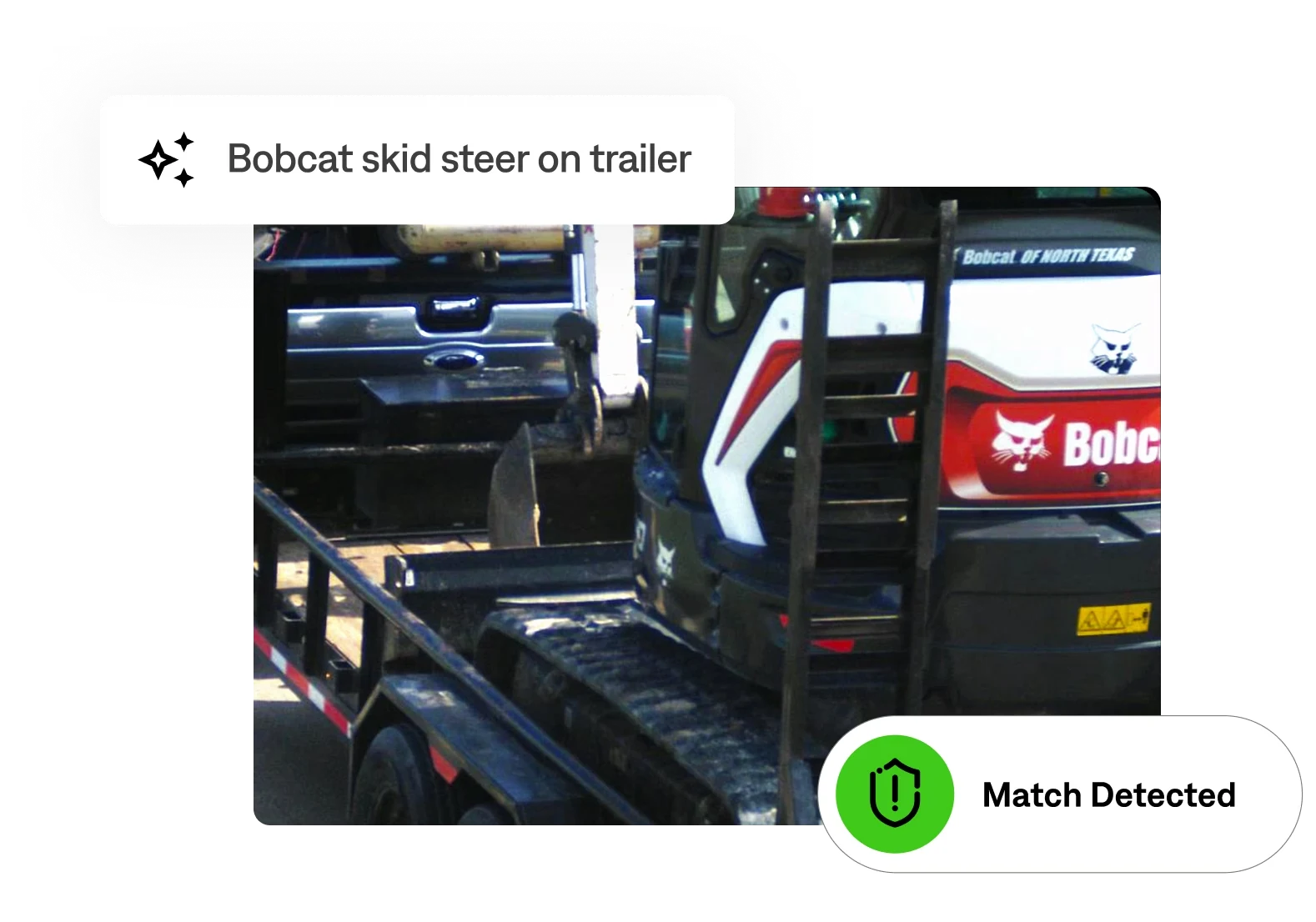
"Capture more detail … no plate required."
"Turn images into actionable evidence — no plate required."
"As soon as somebody does some googling on Flock Safety, there's a lot of information that's out there. A lot of it is wrong."
unsupportedGill did not identify a single specific claim that he believes is wrong. The published sources commonly cited about Flock include: ACLU of Massachusetts (an attorney organization), the Electronic Frontier Foundation, the City of Cambridge's official contract termination statement, Flock's own transparency portals, Flock's own product pages, the 2018 MuckRock public records response that Gill himself signed, sitting elected officials' public admissions, the Wyden/Krishnamoorthi letter to the FTC, and Massachusetts legislative texts. These are primary sources.
A blanket dismissal of online information cannot be evaluated without specifics.
Camera locations are "security issues that would be redacted from any public records request" — though "quite observable"
weak legal basisThe Massachusetts public records law allows redaction under Exemption (f) for investigatory materials. Camera locations on public roads are infrastructure, not investigatory materials. Gill himself acknowledged the cameras are "quite observable."
Other Massachusetts departments — including Waltham and Chelmsford — already publish their Flock camera locations on Flock's own transparency portals. Camera locations and a Flock transparency portal are not in this corpus.
If a future PRR for camera locations is rejected on Exemption (f) grounds, the remedy is to appeal to the Supervisor of Public Records at the Secretary of the Commonwealth's office.
"We don't want to hide this from anybody" — public rollout announcement promised once the system is live
no announcement yetAs of June 2026 (over six weeks after Gill's commitment), no public rollout announcement appears on the Town of Ayer website, APD Facebook page, or the Nashoba Valley Voice. The records remain unpublished. Public access continues to be PRR-only.
Purpose: solving "very high-profile crime across the country" and "minor crime too which is really what affects the town people in Ayer"
contradicts grant program purposeRoutine local-crime investigation is a legitimate use of ALPR technology under MA law. However:
- If the funding was actually NERAC/DHS HSGP as Gill stated (Claim 1), HSGP grants are statutorily earmarked for counterterrorism and catastrophic-incident preparedness — not routine crime investigation. That mismatch would itself be a finding.
- If the funding was actually Byrne JAG as the corpus shows, general law-enforcement support is consistent with the program's purpose — but the documented funding flow contradicts Gill's public statement about NERAC.
"There's been cases in Ayer that if we had this system up, we would have quickly resolved that case and it wouldn't have turned to the areas that it turned."
no specific cases citedNo specific cases were named on the record. Counterfactual claims about unsolved cases are unfalsifiable without specifics — and identifying specific Ayer cases publicly raises its own concerns about victim/witness privacy and ongoing investigations.
What the meeting record now lets the corpus answer
Several of the original Red Flags were marked "open question" or "documented gap" because the corpus alone couldn't establish them. With the public statements made on April 21, 2026, some are now answered:
| Previously open question | What the meeting record adds |
|---|---|
| When were the cameras physically installed? | ~late March 2026 per Gill ("three or four weeks" before April 21). |
| Has training been completed? | No — Gill stated officers had not yet completed training. |
| Was the contract approved by a Select Board vote, or only by Town Manager authority? | The 2026 Town Meeting warrant (Apr 27, 2026) contained no ALPR-related article. Gill described it as funded by a grant and absorbed into the police operating budget — implying no standalone Select Board vote. Confirmation should come from a follow-up PRR for Select Board minutes 2024–2025. |
| Will Policy 426 be published online? | Gill said he had no issue with that. As of June 2026, it has not been posted. |
New questions the meeting record raises
- Was there ever a NERAC project request form for Flock equipment in Ayer? If so, when, and what did it say about purpose? (NERAC meeting minutes are public.)
- Did Ayer receive two federal grants for Flock (Byrne JAG, and separately HSGP via NERAC), or did Gill misstate the funding source?
- What budget line covers Year 2+ once the $25,000 Byrne JAG ends 8/31/2026?
- Why was there a five-month gap between contract signing (10/29/2025) and physical camera installation (~late March 2026)?
- What is Ayer's data-sharing configuration on the Flock backend — and was it set by Flock before APD completed its own training or established its written policy?
Suggested follow-up PRRs
- To MAPC (NERAC fiduciary): any project request forms, council meeting minutes, or grant award documents pertaining to Ayer Police Department from 2023–2026.
- To MA EOPSS/OGR: any DHS Homeland Security Grant Program award documents to the Town of Ayer, separate from Byrne JAG
15PBJA22GG00645JAGX. - To Town of Ayer Select Board: meeting agendas, packets, and minutes from 2023–2025 referencing "Flock," "ALPR," "license plate," "surveillance," or related vendor names.
- To Ayer Police Department: current camera locations, data-sharing configuration export, audit logs of system access from contract date through present, and any training records.